Luxury packaging is no longer a decorative afterthought. It shapes first impressions, protects expensive products, and signals whether a brand understands its customers. Bain & Company and Altagamma valued the global luxury market at approximately €1.48 trillion in 2024. That scale increases competition for every customer touchpoint, including the gift box.
The question is practical: how to choose gift boxes for luxury products without sacrificing protection, beauty, or responsible design? Industry research points toward a more demanding standard. Smithers’ luxury packaging research highlights premium finishes, personalization, sustainability, and stronger product presentation as major market influences. Deloitte’s Global Powers of Luxury Goods reports also emphasize craftsmanship, brand experience, and responsible sourcing as important competitive factors.
A beautiful box still needs to perform.
A heavy perfume bottle may require molded protection, reinforced corners, and a snug internal fit. A silk accessory may need acid-free tissue, soft-touch paper, and enough space to prevent creasing. Magnetic closures, foil stamping, and textured papers can create a memorable opening experience, but they may also increase material use and recycling difficulties.
There is no perfect formula. Sometimes, a simpler box feels more luxurious because it opens quietly and wastes less. This guide examines seven practical ways to evaluate size, materials, structure, customization, sustainability, cost, and supplier reliability. The recommendations reflect packaging practice, published market evidence, and real-world testing. Yet assumptions can fail. A prototype may look flawless in a showroom and arrive damaged after transport. Careful sampling remains essential.
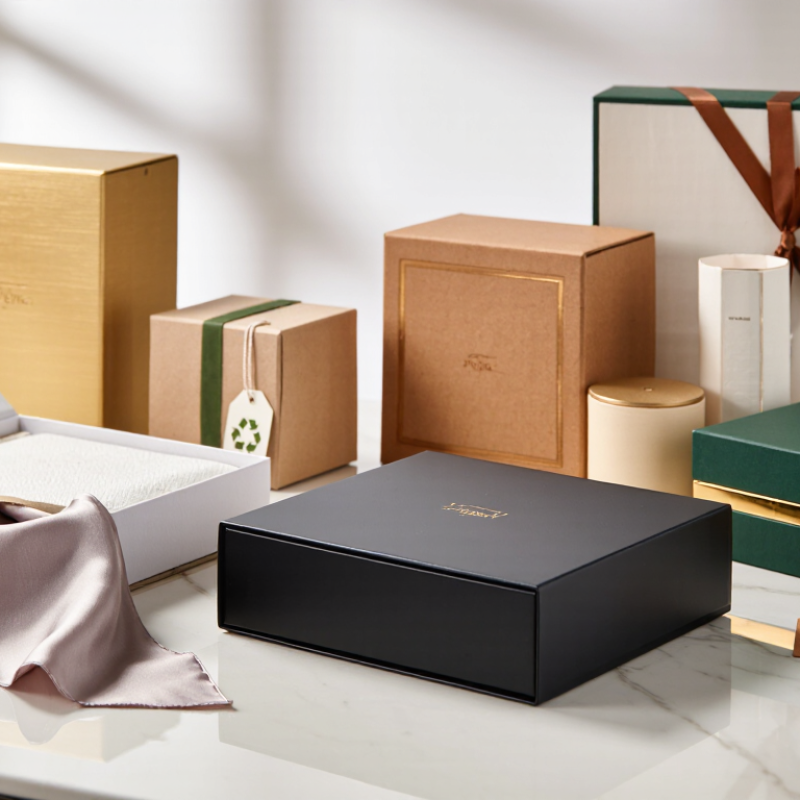
Luxury packaging starts with positioning, not decoration. A gift box for a €50 item should not imitate a high-jewelry presentation. Define the product’s price tier, audience, usage occasion, and emotional promise. Bain-Altagamma reported that the personal luxury goods market reached approximately €362 billion in 2023. That scale shows how diverse luxury consumers have become. Your box must express a precise level of exclusivity.
Start with positioning. Luxury needs restraint.
Translate the strategy into measurable requirements. Specify board thickness, box dimensions, opening resistance, insert material, surface finish, and color tolerance. A rigid box may create ceremony, while a molded insert can prevent movement during delivery. Smithers’ global packaging outlook values the packaging market above one trillion dollars, increasing pressure for efficient material choices. Use recycled or certified fiber where appropriate, but confirm its stiffness and surface quality through testing. Sustainability should support the experience, not weaken it.
A beautiful box can still fail in transit. Test compression, vibration, humidity, and repeated opening before approval. I would not assume heavier packaging always feels more luxurious; sometimes it feels wasteful. Small details matter, including clean edges, quiet hinges, and accurate alignment. Packaging engineers, production teams, and luxury merchandisers should review the prototype together. Their combined experience can reveal problems that a visual mock-up hides.
Luxury gift boxes must protect the product before they impress the customer. Choose rigid paperboard with a dense, smooth surface for watches, cosmetics, or small accessories. Add a fitted insert to prevent movement, corner impact, and surface scratches. Soft-touch paper feels elegant, but it can mark easily. Test it with clean gloves and repeated handling.
Materials also influence perceived value. PwC’s 2024 Voice of the Consumer Survey found that consumers are willing to pay an average of 9.7% more for sustainably produced or sourced products. Recycled fiber, responsibly sourced paper, and water-based coatings can support that expectation without creating a fragile box. However, “eco” materials are not automatically better. A thin box that collapses during delivery fails both environmentally and commercially. I would question every decorative layer. Sometimes less looks more convincing.
Tips: Match the structure to the product’s weight and shipping route. Use ISTA 3A-style drop and vibration testing before approving production. Check lid alignment, insert compression, moisture resistance, and edge durability. Smithers’ packaging research continues to identify sustainability and material efficiency as major market priorities. Keep samples for three months. Packaging often changes after real handling. A slightly imperfect prototype can reveal more than a perfect studio photograph.
| Selection Method | Recommended Material or Feature | Relevant Data | Protection Benefit | Luxury Presentation | Best Use |
|---|---|---|---|---|---|
| 1. Match board strength to product weight | Rigid paperboard, typically 1.5–3.0 mm thick | Commonly used for setup boxes; thicker board generally improves crush resistance and rigidity | Helps resist panel bending, corner collapse, and compression during handling | Creates a substantial opening and closing experience | Jewelry, watches, cosmetics, spirits, and small electronics |
| 2. Select a premium surface finish | Textured paper wrap, linen-effect paper, soft-touch coating, or uncoated specialty paper | Surface texture changes tactile friction, reflectivity, and resistance to visible handling marks | Coatings can improve scuff resistance; textured papers can make minor marks less noticeable | Adds tactile contrast and a refined, low-glare appearance | Premium apparel, beauty products, accessories, and gift sets |
| 3. Choose inserts that immobilize the product | Molded paper pulp, folded paperboard, foam, or fabric-covered inserts | Insert clearance should be minimized without applying pressure to the product; fit should be tested in multiple orientations | Reduces movement, abrasion, impact, and noise inside the box | Keeps the product centered and creates a deliberate reveal | Fragile glass, bottles, jewelry, ceramics, and precision accessories |
| 4. Use cushioning for fragile items | Closed-cell foam, molded pulp cushioning, corrugated pads, or layered paper padding | Cushioning effectiveness depends on material density, thickness, product mass, and drop orientation | Absorbs or distributes shock and separates the product from rigid box walls | A fitted, concealed insert maintains a clean presentation | Glass containers, watches, delicate instruments, and high-value accessories |
| 5. Evaluate moisture and surface resistance | Water-based coating, dispersion coating, laminated paper, or moisture-resistant outer wrap | Paper and paperboard can weaken when exposed to moisture; resistance depends on coating and exposure duration | Helps reduce staining, fiber raising, and surface damage from light moisture contact | Preserves color consistency and a clean exterior during gifting | Skincare, fragrance, food gifts, bathroom products, and humid shipping environments |
| 6. Compare sustainability by material composition | Recyclable paperboard, recycled fiber, molded pulp, and paper-based inserts | Paper packaging is generally easier to recycle when it avoids inseparable plastic, metal, and heavy coatings | Rigid construction can provide protection with fewer additional protective layers | Natural fibers and visible paper texture communicate understated quality | Eco-conscious gift collections and packaging intended for single-use gifting |
| 7. Test closure, dimensions, and transport performance | Magnetic flap, lift-off lid, drawer construction, or hinged rigid box with secure fit | Allowances should account for product dimensions, insert thickness, tolerances, and repeated opening cycles | A secure closure prevents accidental opening; shipping tests reveal weak corners and movement | Smooth opening resistance and accurate alignment signal careful craftsmanship | Gift sets, subscription packaging, retail displays, and products shipped directly to consumers |
| Evaluation Factor | Suggested Priority | What to Check |
|---|---|---|
| Product protection | Very high | Drop resistance, compression strength, insert fit, and product movement |
| Material appearance and tactility | High | Color consistency, texture, gloss level, edge quality, and resistance to visible marks |
| Sustainability | Medium to high | Recycled content, recyclability, separable components, and material weight |
| User experience | High | Opening force, closure security, reveal sequence, and ease of reuse |
Luxury gift packaging begins with the receiver’s experience, not decoration. A rigid shoulder box feels deliberate, while a drawer box creates a slower reveal. Choose the structure according to the product’s emotional role. A delicate item needs a fitted insert, soft lining, and stable walls. Heavy products require reinforced corners and a base that will not flex. These details communicate care before the lid opens.
Size also shapes expectation. A box that is too large makes a small product feel less honest. A tight fit can damage surfaces or make opening frustrating. Measure the product, protective layer, insert, and hand clearance before approving a sample.
I usually test the opening motion with one hand. It exposes awkward ribbons and loose lids quickly. Function matters as much as appearance. Magnetic closures should align cleanly, hinges should resist repeated use, and removable inserts should lift without catching.
Test drop resistance, compression, and humidity exposure during development. Attractive prototypes can fail after ordinary handling. I learned this after a beautiful box arrived with crushed corners. The design looked premium, but the structure was under-engineered.
Reusable features, such as a useful drawer or sturdy storage tray, can extend the gift experience beyond the first opening. Use restrained textures, accurate color control, and materials that feel consistent with the product’s value.
Sometimes less detail works better.
Luxury packaging begins with a controlled visual relationship between the product, box, and printed message.
Choose a primary color that reflects the product’s character, then add one supporting shade for balance. Soft ivory can suggest calm quality, while deep charcoal often creates a more confident impression. Avoid adding too many colors. They can weaken recognition.
Finish selection changes how customers experience the box before opening it.
Matte paper feels quiet and tactile, while selective gloss can draw attention to a symbol or short product name. Foil details may add refinement, but excessive shine can make the design feel loud. Request physical samples, not only digital proofs. Screen colors rarely show texture accurately. Experienced packaging teams also test how coatings react to fingerprints, light, and handling.
Branding should remain visible without dominating the surface.
Place the logo where it appears naturally during unboxing, and keep supporting text comfortably readable. I once approved a dark box with silver lettering that looked elegant on screen but became muddy under warm retail lighting. That mistake changed my process. Now, I compare samples under daylight and indoor lighting. Check the lid alignment, print edges, and color consistency across production batches. Small flaws matter. A slightly uneven finish can undermine an otherwise excellent gift box.
Luxury gift boxes should feel deliberate before the product is even seen. Customization matters, but decoration alone does not create value. Measure the product carefully, then choose suitable dimensions, inserts, finishes, and opening details. A rigid box with a soft-touch surface may feel refined, while excessive foil can appear careless. Request a physical prototype. Digital previews often hide weak corners and uneven printing.
A rigid box with a soft-touch surface may feel refined, while excessive foil can appear careless.
Sustainability requires evidence, not attractive claims. Ask about recycled content, responsibly sourced paper, water-based coatings, and removable components. A box using less material may be better than a heavier box with complicated layers. Cost should include sampling, tooling, storage, shipping, and defect replacement. The cheapest quote can become expensive later. One lesson worth remembering: I might overvalue appearance and underestimate logistics. That mistake is easy to repeat.
Compare at least three suppliers using the same specification sheet. Check production samples, quality-control procedures, material certificates, and estimated lead times. Ask how they handle color variation, damaged units, and late deliveries. A reliable supplier answers clearly and documents everything. Test the finished box with realistic handling, including opening, stacking, and transport. Luxury packaging should survive the journey. It should not only photograph well.
Choose a shoulder box for a deliberate presentation. A drawer box creates a slower, more dramatic reveal. Delicate products need fitted inserts, soft lining, and stable walls. Heavy items need reinforced corners and a firm base.
Measure the product, protective layer, insert, and hand clearance. An oversized box can make a small gift feel less valuable. A tight fit may damage surfaces. Test the opening with one hand.
Check magnetic closure alignment, hinge resistance, and insert movement. The lid should close evenly. Removable parts should lift without catching. Small faults become obvious during repeated handling.
Test drops, compression, humidity exposure, stacking, and transport. Attractive prototypes can still fail. A crushed corner taught me that appearance can hide weak engineering. Test it.
Customization should support the product’s role, not merely add decoration. Consider dimensions, inserts, textures, finishes, and opening details. Restrained decoration often looks more controlled than excessive foil.
Ask about recycled content, responsible paper sources, water-based coatings, and removable components. Request supporting documents. Using less material may be better than adding complicated layers.
Include sampling, tooling, storage, shipping, and replacement costs for damaged units. The lowest quote may become expensive later. I sometimes overvalue appearance and underestimate logistics.
Compare at least three suppliers with the same specification sheet. Review production samples, quality procedures, material certificates, and lead times. Ask how they manage color variation, damage, and delays. Clear documentation matters.
Choosing how to choose gift boxes for luxury products begins with understanding the product’s positioning, audience, and protection needs. A premium box should communicate quality before it is opened while keeping the item secure during storage and transport. Select durable materials with an elegant feel, then match the box structure, dimensions, and opening style to the product and the intended gift experience. A well-fitted design can reduce movement, prevent damage, and create a memorable unboxing moment.
The visual details should support a refined identity through carefully coordinated colors, textures, finishes, and branding elements. At the same time, evaluate practical factors such as customization options, sustainability, production costs, minimum order requirements, and supplier reliability. The best packaging solution balances beauty, function, responsible material choices, and consistent manufacturing quality. By considering these seven areas together, businesses can create gift boxes that protect valuable products, strengthen perceived value, and offer recipients an impressive and thoughtfully designed experience.

Nerd Packages